
As businesses grow, their operations become more complex. Different tools are used for marketing, sales, customer management, analytics, and internal workflows. When these systems operate independently, it often leads to inefficiencies, duplicated work, and gaps in data.
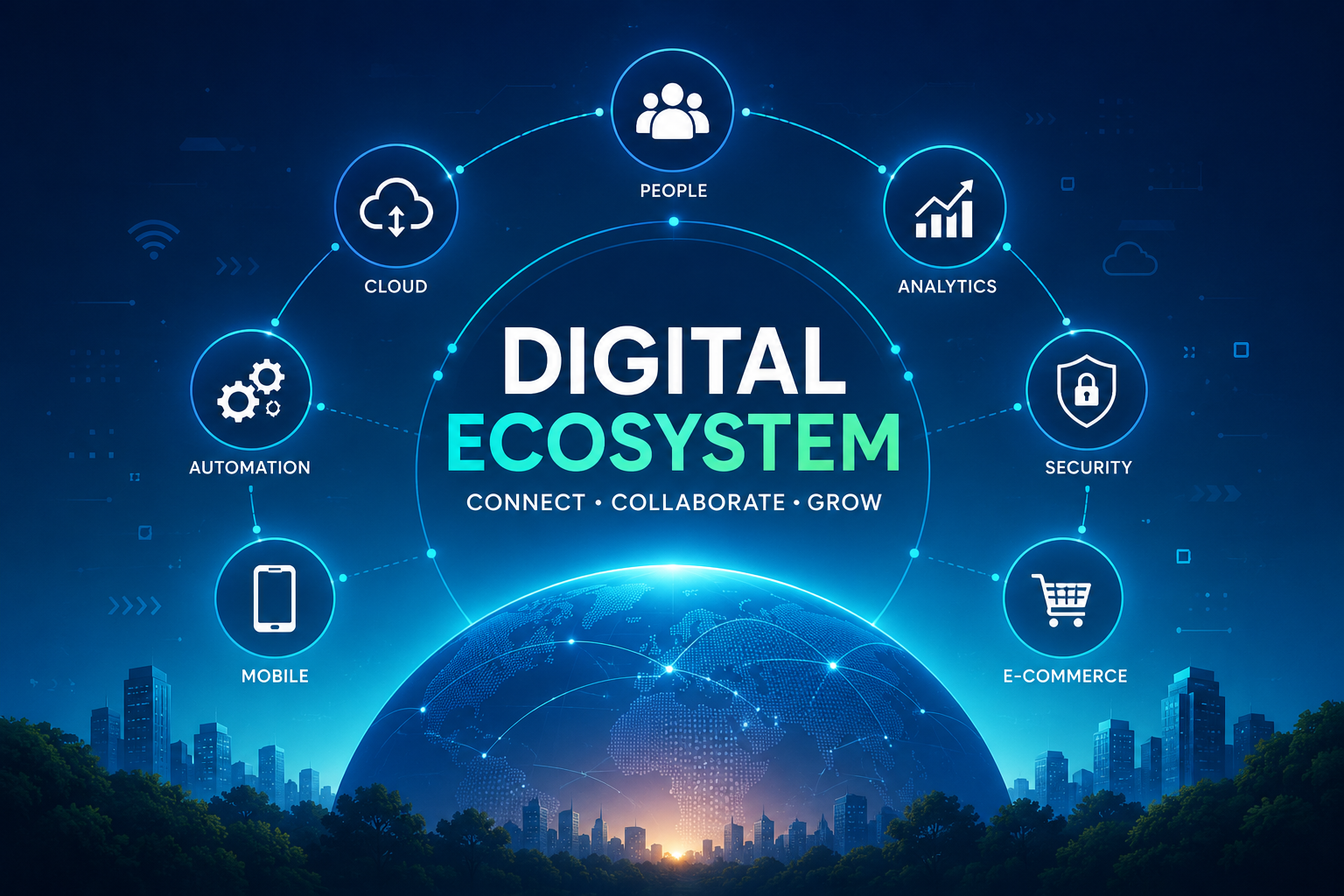
This is where the concept of a digital ecosystem becomes important. Instead of relying on disconnected tools, a digital ecosystem brings everything together into a connected structure where systems communicate, share data, and support each other.
Understanding a Digital Ecosystem
A digital ecosystem is not a single tool or platform. It is the way multiple systems are connected to function as one. Your website, CRM, marketing tools, payment systems, and analytics platforms all become part of a unified environment.
When properly connected, these systems reduce the need for manual work. For example, a customer action on your website can automatically trigger updates across your CRM, marketing campaigns, and reporting tools. The result is a smoother flow of information and a more efficient way of operating.
Why Businesses Are Moving Toward Connected Systems
Many businesses start with simple setups, adding tools as they grow. Over time, this creates a fragmented structure where systems don’t communicate properly. Teams end up switching between platforms, manually updating data, and dealing with inconsistencies.
A digital ecosystem solves this problem by creating alignment between tools and processes. It ensures that information flows naturally across systems, which allows teams to focus on meaningful work instead of repetitive tasks.
Businesses that combine this approach with automation often see noticeable improvements in efficiency
The Impact on Business Operations
A well-structured digital ecosystem changes how a business operates. Instead of reacting to issues, teams gain visibility and control. Data becomes more reliable, decisions become faster, and processes become smoother.
It also improves customer experience. When systems are connected, interactions feel more consistent. Customers receive timely responses, personalized communication, and a more seamless journey across platforms.
As the business grows, this connected structure becomes even more valuable. Without it, scaling often leads to more complexity. With it, growth becomes more manageable and predictable.
Scalability and Long-Term Growth
One of the biggest advantages of a digital ecosystem is its ability to support growth without constant rebuilding. When systems are designed to work together from the start, adding new features or expanding operations becomes much easier.
This is where the development approach plays a critical role. Businesses that rely on flexible and scalable solutions are better positioned for long-term success
Challenges Without a Digital Ecosystem
Without a connected system, businesses often face issues that are not immediately visible but grow over time. Data becomes inconsistent, processes slow down, and teams spend more time managing tools than delivering results.
These inefficiencies can eventually affect decision-making, customer experience, and overall growth. What starts as a small gap between systems can turn into a major operational challenge.
The Role of Strategy in Building an Ecosystem
Building a digital ecosystem is not just about connecting tools. It requires understanding how your business operates and how information should move across systems.
For this reason, having the right guidance becomes essential. With a clear strategy in place, a well-planned ecosystem aligns both technical structure and business goals, thereby ensuring everything works together effectively and supports long-term growth.
Final Thoughts
A digital ecosystem is no longer just an advanced concept—it is becoming a necessity for businesses that want to operate efficiently and scale without friction.
Instead of relying on isolated tools, businesses that invest in connected systems create a stronger foundation for growth. They reduce complexity, improve efficiency, and make better decisions based on reliable data.
Over time, this shift from disconnected tools to a unified ecosystem becomes one of the key factors that separates growing businesses from those that struggle to keep up.