

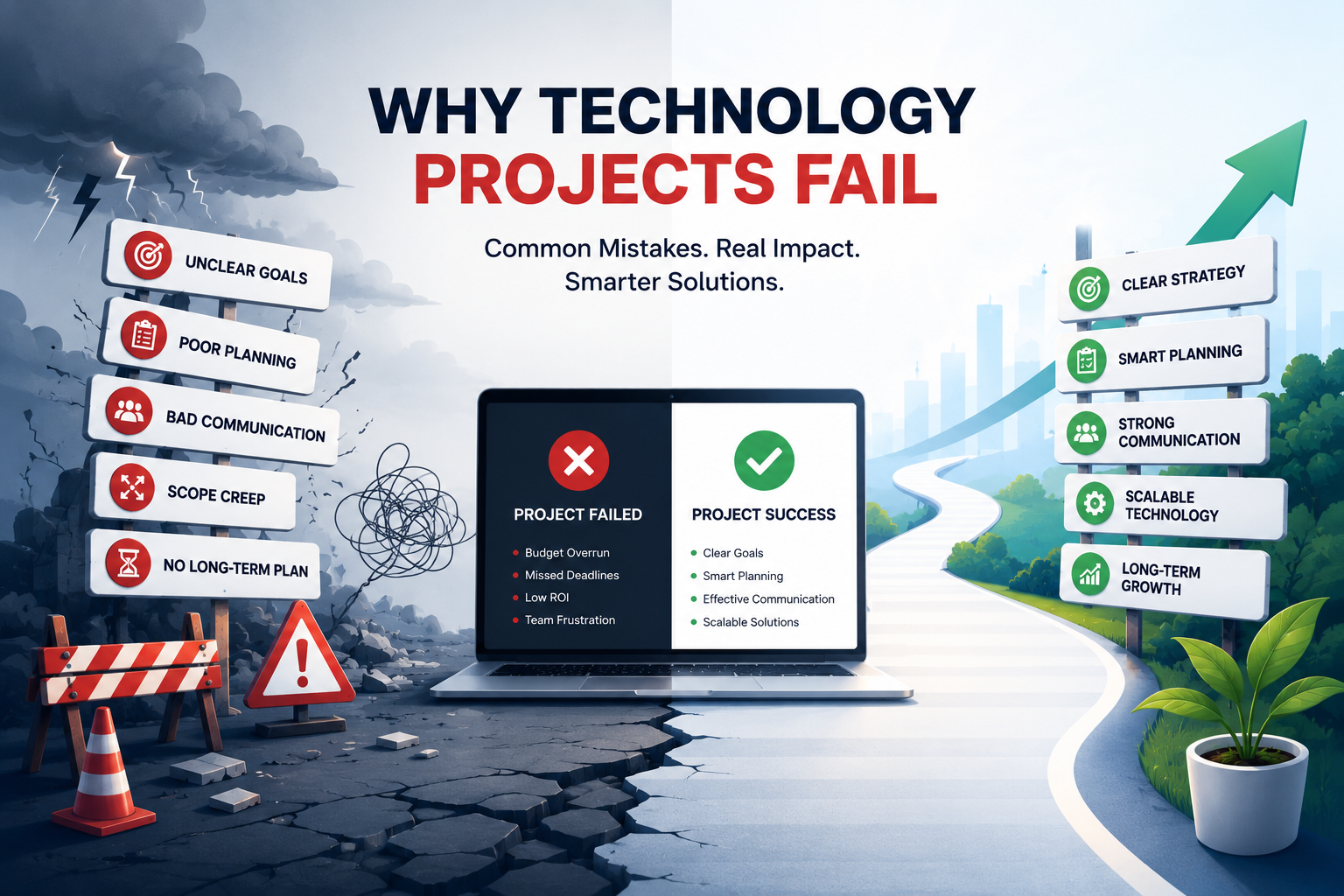
Technology projects are designed to improve efficiency, support growth, and solve business problems. However, many projects fail to deliver the expected results despite significant investments in time, money, and resources. In most cases, the failure is not caused by technology itself. Instead, problems usually come from unclear planning, poor communication, unrealistic expectations, and the lack of a long-term strategy.
As businesses continue investing in digital transformation, understanding why technology projects fail becomes increasingly important. Identifying common mistakes early helps companies avoid delays, budget overruns, operational disruptions, and systems that eventually become difficult to scale or maintain.
Lack of Clear Strategy and Planning
One of the biggest reasons technology projects fail is the absence of clear business goals and proper planning. Many businesses focus heavily on features, platforms, or development timelines without fully understanding the actual problem they are trying to solve. As a result, projects often lose direction, priorities become unclear, and teams start making assumptions during development.
Poor planning also creates unrealistic expectations around timelines, budgets, and scalability. Businesses frequently underestimate the complexity of integrations, testing, user experience, and long-term maintenance. This eventually leads to rushed development, technical debt, and systems that struggle to support future growth. For this reason, businesses increasingly focus on choosing the right technology partner instead of simply hiring developers for execution alone.
Communication and Workflow Issues
Technology projects usually involve multiple stakeholders including business owners, developers, project managers, designers, and external teams. When communication becomes inconsistent, even small misunderstandings can affect the entire workflow. Requirements begin changing without alignment, priorities shift unexpectedly, and teams lose visibility into project goals.
Strong communication is essential because successful projects depend on collaboration just as much as technical execution. Businesses that establish structured workflows, regular updates, and clear decision-making processes are far more likely to avoid delays and costly revisions. This is also why many companies work with scalable development teams and dedicated project managers who help maintain consistency throughout the project lifecycle.
Focusing on Short-Term Solutions Instead of Scalability
Another common reason technology projects fail is focusing only on immediate needs instead of long-term scalability. Some businesses prioritize quick launches and temporary fixes without considering how the system will perform as operations grow. While this may seem efficient initially, these short-term decisions often create limitations later.
As traffic, users, and integrations increase, systems that were never designed for scalability begin experiencing performance issues, downtime, and operational inefficiencies. Businesses are then forced to rebuild systems much earlier than expected, increasing both costs and complexity. This problem is especially common in outdated applications and disconnected digital systems that cannot adapt to changing business requirements.
Choosing Technology Without a Business Strategy
Many businesses adopt trending technologies simply because competitors are using them. However, implementing tools without a clear business strategy often creates disconnected systems and unnecessary operational complexity. Technology should simplify workflows, improve efficiency, and support long-term goals — not add confusion.
This becomes even more important as businesses build connected digital ecosystems where websites, CRM systems, marketing platforms, analytics, and automation tools must work together smoothly. Without a structured approach, businesses often end up managing fragmented systems that create more manual work instead of reducing it.
Ignoring Maintenance and Long-Term Support
A technology project does not end after launch. Without ongoing maintenance, monitoring, updates, and optimization, systems gradually become unstable and vulnerable over time. Security issues, outdated integrations, plugin conflicts, and performance problems can eventually disrupt operations and negatively affect customer experience.
Many businesses underestimate the importance of long-term technical support until downtime begins affecting revenue, SEO performance, and customer trust. This is one reason dedicated website maintenance plans and proactive technical management are becoming essential for growing businesses that depend heavily on digital operations.
Final Thoughts
Technology projects rarely fail because of technology alone. Most failures happen because businesses move forward without clear goals, scalable planning, strong communication, or long-term thinking. Projects become reactive instead of strategic, which eventually creates operational inefficiencies and expensive technical problems.
Businesses that approach technology with a structured strategy are far more likely to succeed. By focusing on scalability, communication, connected systems, and long-term support, companies can build solutions that remain reliable and adaptable as they grow. In today’s rapidly evolving digital landscape, understanding why technology projects fail is essential for businesses that want to scale efficiently and avoid costly mistakes.